A new sound or a different pedal feel is information worth taking seriously. Here is how to describe the change—and what a careful inspection should establish.
Start with the change you noticed
You know the ordinary feel of your car better than anyone who has just climbed into it. That makes your description valuable. A noise that happens only on the first stop of the morning is a different starting point from a vibration that returns at motorway speeds. Notice when the change appears, whether it happens every time and whether anything else feels different. You do not need to identify the failed part. You only need to explain what has changed.
Write down a short account while it is fresh. Was the road wet? Had the car been standing? Did the noise begin after other work? Tell the workshop about dashboard warnings and recent maintenance as well. A good conversation prevents an inspection from becoming a search guided only by assumptions. Avoid deliberately recreating a concerning symptom on the road. The workshop can decide how to investigate it safely.
Sounds are clues, not a diagnosis
Squealing can have several explanations, including the condition of the friction surfaces and the way the braking components are operating together. A grinding sound can indicate a more serious contact or wear problem. Neither sound, heard remotely, tells us exactly which parts need replacing. The right next step is to inspect the assembly and measure what matters rather than turn a noise into a parts order.
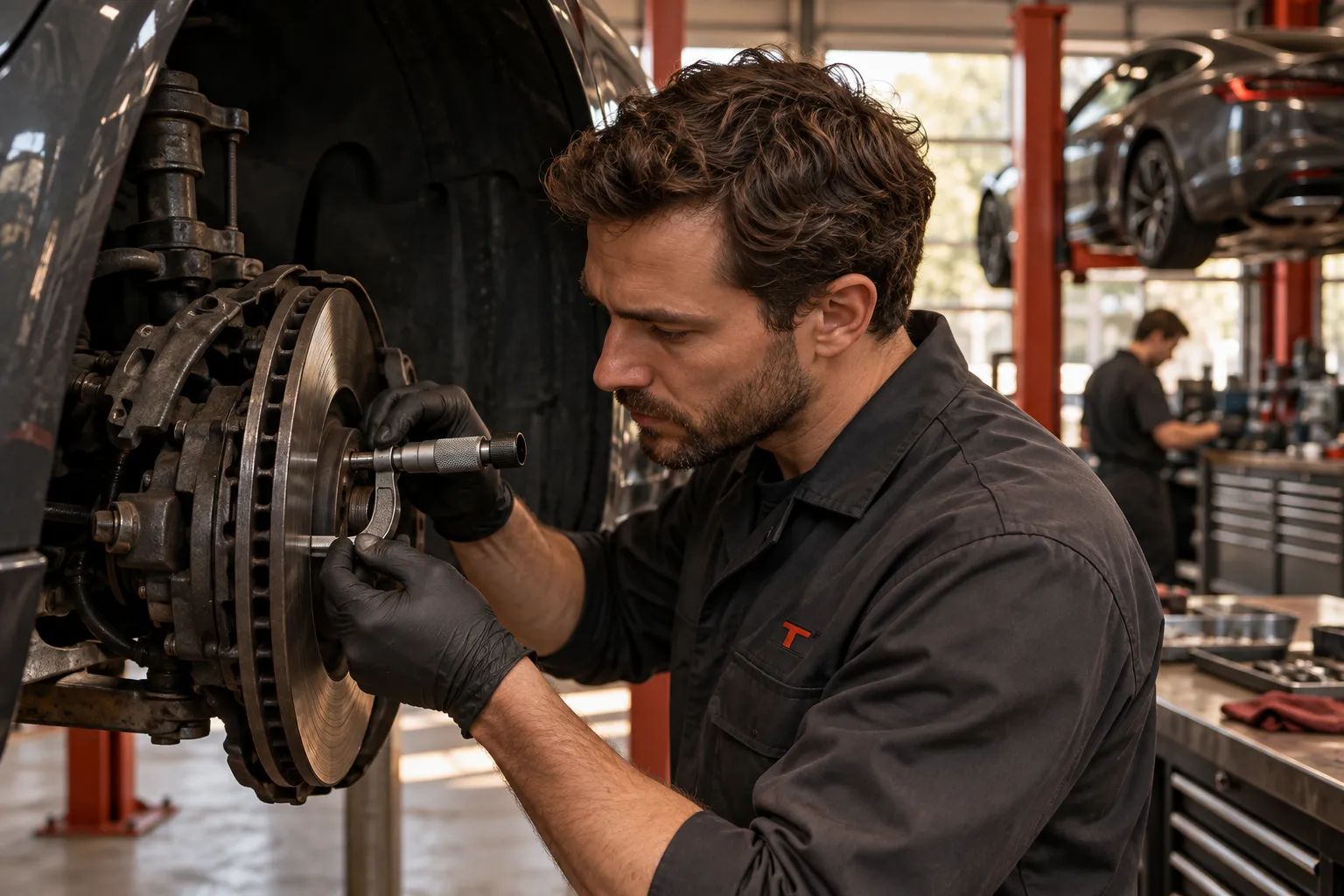
At TORREN, that means explaining access before taking things apart, looking at the pads and discs, and checking relevant surrounding components. A photograph can make a worn surface easier to understand, but it is the measurements and the applicable specification that support a recommendation. Where a component cannot be assessed without further access, that limitation belongs in the explanation.
Pay attention to feel and direction
A changed pedal feel, vibration during braking or a pull to one side should be assessed promptly. There can be more than one contributing system, so the investigation may extend beyond the visible friction surfaces. Describing whether the vibration is felt through the pedal, the steering wheel or the whole car gives the technician a useful place to begin. It is not proof of a particular cause.
If braking feels ineffective, the pedal behaviour is markedly abnormal, or a warning instructs you to stop, stop in a safe place and arrange assistance. Follow the instructions in your own vehicle handbook; warning symbols and recommended actions vary. Do not treat a booked workshop appointment as permission to keep driving a vehicle whose braking performance concerns you.
What an estimate should explain
An understandable estimate connects the finding to the proposed work. Ask which components were inspected, what was measured and why replacement or further testing is recommended. You should be able to distinguish the inspection fee from the cost of parts and labour. If the workshop discovers something additional after gaining access, there should be another conversation before the scope grows.
The cheapest line on a quotation is not always the most useful comparison. Check what is included: the component specification, necessary fitting items, the work on the relevant axle and the checks after installation. A clear scope makes it easier to compare like with like. It also helps you decide what to approve without feeling that you must understand every technical term.
The handover matters too
After approved work, ask what was completed and how the result was checked. A responsible handover includes a written record and any relevant advice for the fitted components. It should separate completed repairs from items that still need attention. If a symptom could not be reproduced, that uncertainty should be recorded rather than disguised as a definite answer.
The point of a brake inspection is confidence grounded in evidence. Listen to changes, give the workshop a useful account and expect the recommendation to be explained. This guide cannot assess your car at a distance. Your vehicle handbook and an inspection of the actual vehicle remain the right basis for a decision.
Further reading & guidance
This guide offers general information. Follow your vehicle handbook and seek an assessment for concerns about your own car.
Ford: dashboard warning lights ↗The Highway Code: vehicle maintenance ↗