
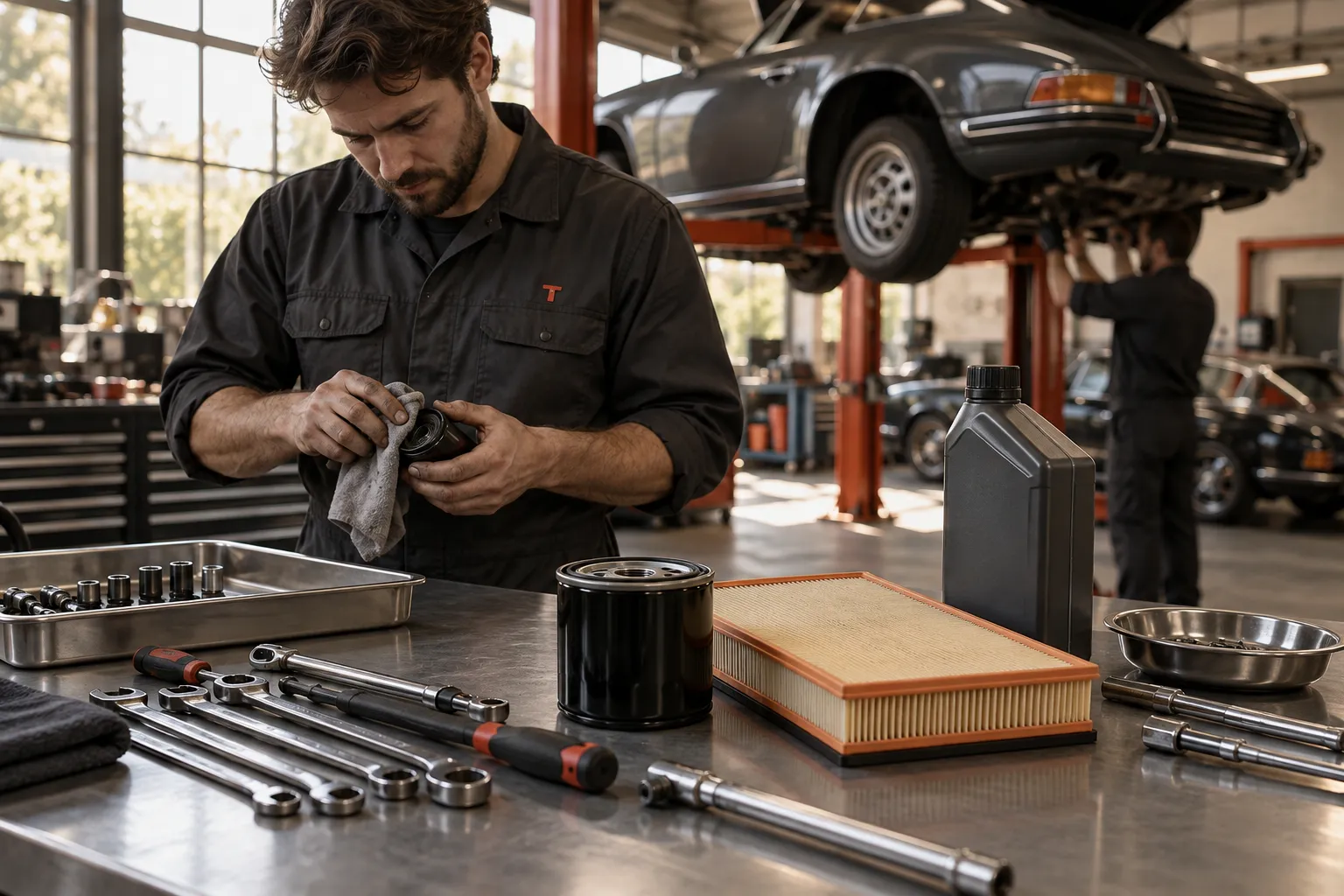
A service is a sequence of decisions and checks, not simply a fresh oil filter. Knowing the sequence helps you understand the estimate and the handover.
Begin with the right schedule
The first question is not which package sounds most comprehensive. It is what your particular vehicle is due. Age, mileage, engine specification and previous maintenance all help establish the scope. A workshop should check the applicable manufacturer schedule and discuss anything missing from the history. Two cars parked beside each other can need different work even when their owners describe both visits as a routine service.
Bring the service book or available invoices, and mention anything you have noticed between visits. An intermittent starting issue or a new noise may call for a separate diagnosis rather than an additional maintenance item. The distinction matters: replacing scheduled parts and investigating a fault have different purposes. Agreeing the scope first keeps the visit useful and the estimate understandable.
Oil and filters need a specification
Engine oil is selected for the vehicle requirement, not merely by choosing a familiar brand or a similar-looking bottle. The workshop should establish the correct specification and quantity before the work begins. Filters also need to match the vehicle. Depending on the schedule, the visit may involve the oil filter alone or additional air, cabin or fuel filtration work. Those items should be named on the estimate.
Ask what is included rather than assuming the word service covers every filter. An air filter that has reached its scheduled replacement point is a different decision from one being checked for condition. Clear terminology avoids disappointment at collection and gives you a record you can use when planning the next visit. It is also a useful check when comparing estimates from different workshops.
Checks should produce useful findings
Routine checks look at the accessible condition of relevant fluids, tyres and wear items. Their scope depends on the vehicle and the service being carried out. A check is valuable when the workshop records what it found and explains what needs attention. A long list of ticks without any context tells you much less than a short report with a measured finding and a sensible next step.
There are limits to what can be inspected without dismantling. A service is not automatically an investigation of every hidden component, and it is not a substitute for an MOT or a diagnosis of a specific fault. If additional access is needed, the workshop should explain the reason and cost. You should know whether an observation is confirmed, provisional or outside the agreed inspection scope.
Keep recommendations separate
Sometimes a routine visit reveals another issue. The useful response is a clear explanation of the finding, its significance and the proposed work. You should be told what needs prompt attention, what can be planned and what will be monitored. That conversation comes before additional parts are fitted. An estimate is easier to assess when it names the work instead of relying on a broad description such as extra maintenance.
At TORREN, completed items and recommendations are recorded separately. That avoids the impression that a flagged issue has already been repaired. Where a concern requires further testing, the recommendation should say so. A careful workshop can acknowledge uncertainty; it does not need to turn every observation into an immediate replacement.
Leave with a usable record
The final checks and handover complete the service. Ask for the specification of the oil used, the items changed and a record of the checks. If a service reminder is reset, that should follow the completed work and the vehicle procedure. The next interval should come from the applicable schedule or monitoring system, with the relevant time limit considered as well as mileage.
A useful record serves the next workshop visit and future ownership decisions. Keep it with earlier invoices so there is a consistent maintenance history. You do not need to memorise the entire schedule. You need to know what was done, what remains to be considered and when to look again. That is how a routine visit becomes a practical plan for the miles ahead.
Further reading & guidance
This guide offers general information. Follow your vehicle handbook and seek an assessment for concerns about your own car.
Ford: oil-life service reminders ↗The Highway Code: vehicle maintenance ↗