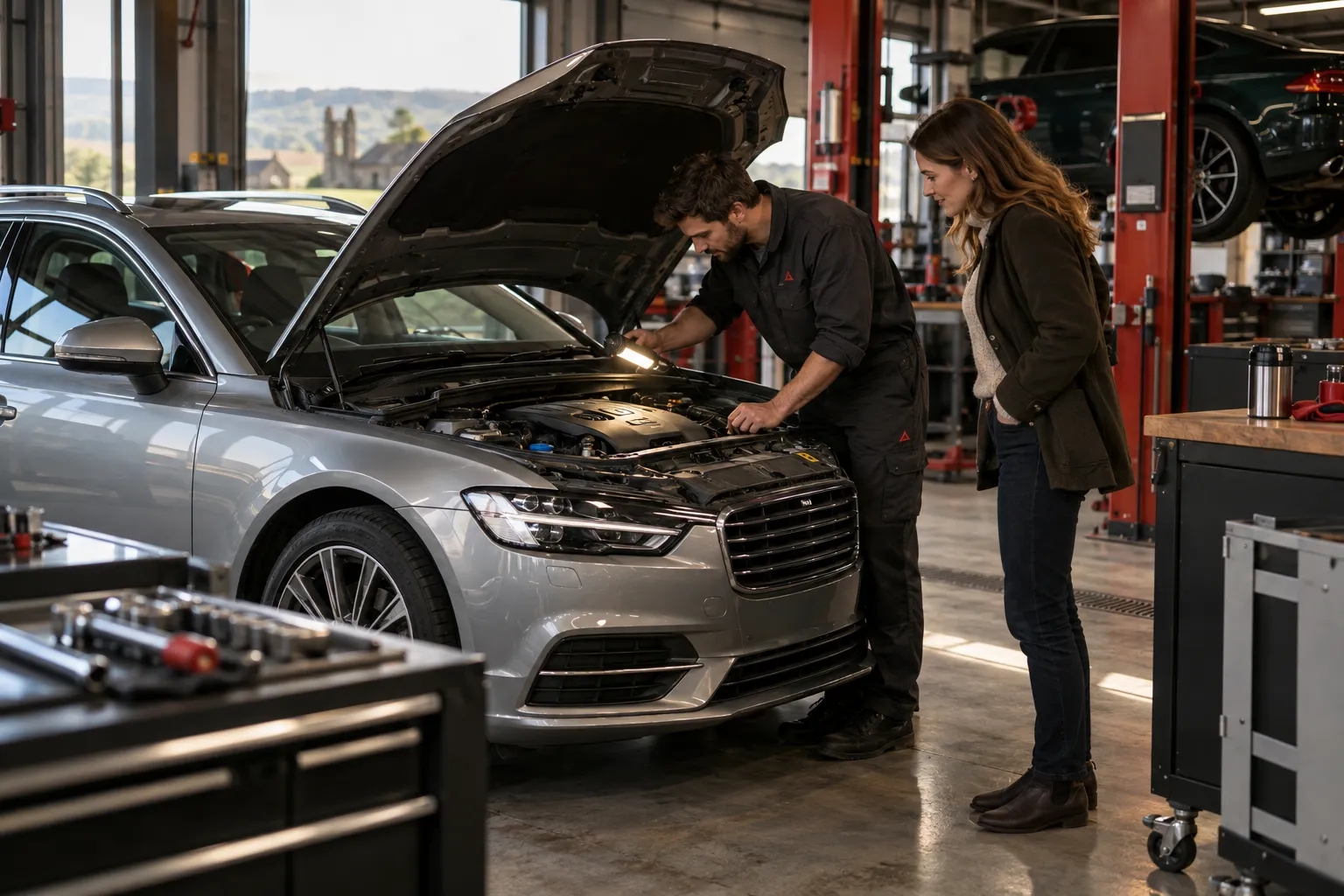
A short look at your tyres can reveal something worth investigating. Treat it as a regular observation, with the handbook and a proper inspection behind your decisions.
Make a small check a familiar habit
Tyres are easy to overlook because most of the time they simply do their job. A brief check before a journey gives you a chance to notice a change while the car is stationary. Walk around the vehicle in good light and look at each tyre, not just the side closest to the pavement. You are looking for a reason to ask a question, rather than trying to become a tyre specialist in two minutes.
A quick visual check has limits. It cannot show every part of a tyre or establish the condition of concealed surfaces. If something looks unusual, arrange a closer assessment. Keep a note of repeated pressure loss or new steering behaviour as well. Those observations help the workshop understand whether it needs to investigate a tyre, a wheel or another system.
Use the pressure for your vehicle
The recommended pressure comes from the vehicle manufacturer and may change with the load being carried. Look in the handbook or the vehicle information label for the relevant setting. Follow the instructions about when and how to measure it. A number moulded into the tyre sidewall is not a replacement for the vehicle recommendation. Different front and rear settings can be intentional.
If a tyre repeatedly needs air, find out why. Adding air may restore the reading temporarily without resolving the cause of the loss. Tell the workshop which tyre is affected and how quickly the change occurs. If your car has a tyre-pressure monitoring system, follow its instructions as well; the warning system complements checks rather than making every visible inspection unnecessary.
Look across the tread, not one spot
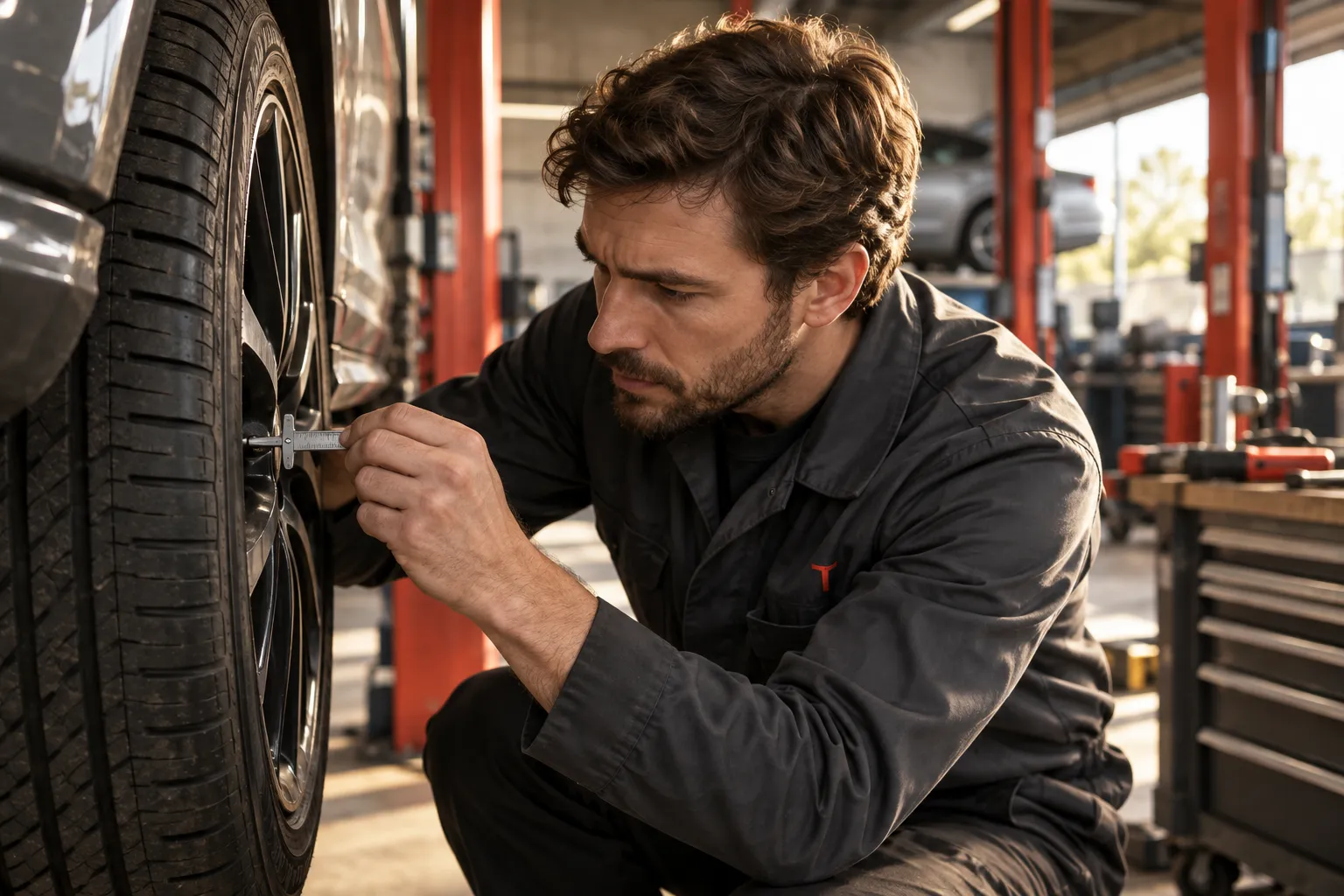
For cars in the UK, the legal minimum tread depth is 1.6 mm across the central three-quarters of the tread and around the whole circumference. A proper gauge helps assess depth, but the legal minimum alone does not describe the entire condition of a tyre. Look for uneven wear and visible damage, and ask for a professional assessment if you cannot inspect an area properly.
An outer edge wearing differently from the rest is useful information. It can prompt checks of pressure, alignment or mechanical condition, but the wear pattern does not establish a single cause by itself. The workshop should assess the tyre condition and the relevant vehicle systems before recommending an adjustment. Alignment cannot restore tread already lost from a worn tyre.
Notice cuts, bulges and changes
Look at the visible sidewalls for damage or an unusual shape. A cut, bulge or other concerning defect needs prompt assessment. Do not dismiss it because the pressure appears normal. Equally, do not rely on a distant photograph to decide a tyre is safe. The condition, location and extent of damage matter, and some assessment requires direct access to the tyre.
A new vibration, pulling or a change after hitting a pothole is worth mentioning. Avoid repeatedly driving to demonstrate a concerning problem. A workshop can decide what inspection and controlled testing are appropriate. If a tyre appears seriously damaged or the car behaves unsafely, stop using it and seek assistance rather than waiting for the next routine maintenance visit.
Turn the observation into a clear next step
When you book an assessment, give the workshop a concise description: which corner of the car, what you noticed and when it began. Ask for the findings to distinguish tyre condition from alignment measurements or other mechanical wear. That makes a recommendation easier to understand and prevents the cost of an adjustment from being confused with the cost of a replacement tyre.
Keep the check simple enough to repeat. A regular glance, the correct pressure guidance and attention to changes are useful habits. They support, rather than replace, professional inspection and your responsibilities as a driver. Two minutes is a good beginning; the important part is acting on something that does not look or feel right.
Further reading & guidance
This guide offers general information. Follow your vehicle handbook and seek an assessment for concerns about your own car.
The Highway Code: vehicle maintenance ↗