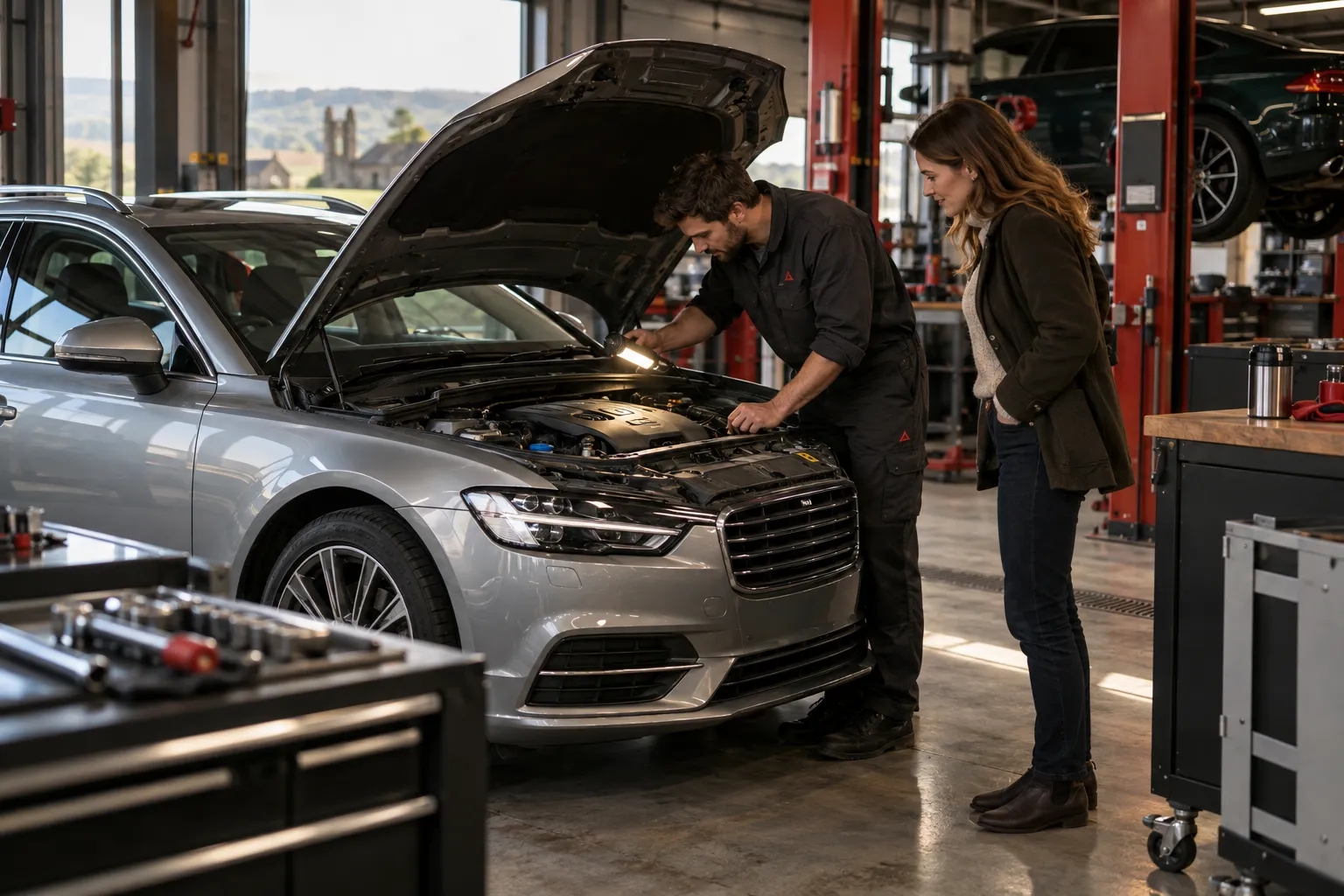

Prepare while the weather is ordinary. A calm check of starting, visibility, fluids, tyres and everyday equipment is more useful than a rushed look on a freezing morning.
1. Listen to how the car starts
Notice whether starting sounds different from usual, particularly after the car has been standing. Tell the workshop about slow cranking, repeated assistance or recent electrical work. A battery assessment is more useful than assuming that age alone explains the problem. The starting and charging systems can be considered together where the symptoms call for it. What matters is the condition found on your actual vehicle.
If the car is used mainly for short journeys or spends long periods parked, explain that pattern. It helps the technician interpret the findings and discuss suitable next steps. Do not choose a charger or carry out jump starting from a generic online instruction: follow the vehicle handbook and the equipment instructions. Modern vehicles can have particular connection points and battery requirements.
2. Give visibility a proper look
Check the visible condition of the wiper blades and whether the washers deliver fluid where it is needed. Smearing, missed areas or poor washer performance are observations worth resolving before difficult weather arrives. Use screenwash suitable for the conditions and follow its instructions. Make the checks while parked safely, with enough time to deal with a problem rather than discovering it during a journey.
Look at the lights as well. A second person can help you check them without leaving the car running unattended. Keep lenses and windows clean so the equipment has a fair chance to work. Before moving off, clear the windows properly and follow the Highway Code requirements for visibility. The small preparation tasks matter because the driver's view comes before the timetable.
3. Check fluids using the handbook
Fluid checks have vehicle-specific procedures. Identify the correct reservoir, the right conditions for reading a level and the specified fluid before adding anything. In particular, never open a hot coolant system. If you are unsure about a level or which product belongs in the car, ask the workshop. The right response to a repeated loss is investigation, not an indefinite series of top-ups.
An inspection can record the accessible condition and advise whether further testing is warranted. Tell the technician how often you have needed to add fluid and whether there are visible marks where the vehicle is parked. Those details can guide the assessment. A winter preparation visit is a sensible opportunity to discuss a pattern that has been easy to postpone during warmer months.
4. Review the tyres and the load
Check pressures using the manufacturer's recommendation for the vehicle and the load you expect to carry. Look for uneven wear and visible damage, and arrange an assessment if an area concerns you. A winter trip with luggage can mean a different pressure recommendation from your usual journey. The handbook or vehicle label provides the relevant setting; a general number from another car does not.
Think about tyre condition before the day of travel. If a replacement or closer inspection is needed, leaving time for it makes the decision easier. The choice of tyre should suit the vehicle, conditions and manufacturer requirements. A brief seasonal check cannot guarantee grip or replace adjusting your driving to the road and weather. It simply helps avoid starting the journey with an overlooked problem.
5. Plan the practical details
Make sure you can find the handbook, assistance details and any equipment you normally carry. Check that a phone can be charged and that an ice scraper is accessible. Consider the journey and likely conditions when choosing warm clothing and other essentials. These are simple ownership decisions, but they are easier to make at home than beside a car that will not start.
If the car is due maintenance, arrange it before the busy travel period and mention the planned trip. Ask the workshop to explain what its seasonal inspection covers and what remains outside the scope. A condition check is not a promise that nothing will go wrong. It is a way to find visible issues, understand useful next steps and leave with fewer unanswered questions before the weather changes.
Further reading & guidance
This guide offers general information. Follow your vehicle handbook and seek an assessment for concerns about your own car.
The Highway Code: vehicle maintenance ↗The AA: basic car checks ↗